The Homeschool Boost: Daily Habits That Stick
January 12, 2026This post is written by a guest contributor.
Homeschooling comes with a special kind of freedom and a special kind of pressure. You can move at your child’s pace, choose approaches that fit their specific needs, and dedicate additional time where needed. But you’re also balancing multiple roles as teacher, planner, motivator, and “principal” of the household schedule.
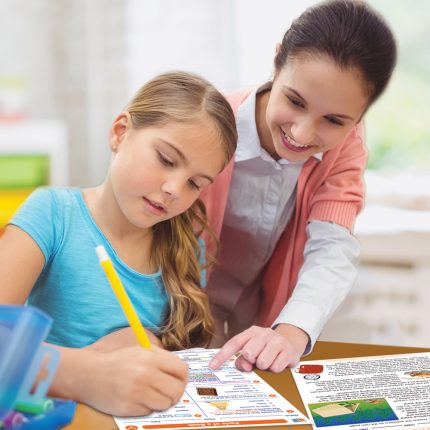
One of the simplest ways to make homeschooling more consistent (and less exhausting) is to add a reliable Print-and-Go Resources such as Activity Worksheets, Study Guides, Vocabulary Activities, etc. Used well, these resources don’t replace your core curriculum; they supplement it, fill learning gaps, and provide “comprehension checkpoints”.
As a teacher, I’ve seen time and again that students thrive when practice is
- Targeted
- Manageable
- Repeated
The good news is that these same principles are easy to apply at home, especially with printable resources you can access quickly, including free options on www.NewPathWorksheets.com
Why Print Resources Work So Well in Homeschooling
Print resources support what homeschool already does best because they’re:
- Flexible: Independent work, guided practice, small-group (siblings), or tutoring
- Low-prep: Print, teach, save
- Focused: One skill per page – ideal for gaps and reteaching
- Portable: Learning can happen anywhere – kitchen table, library, travel days
And there’s a quieter benefit: print practice creates a consistent rhythm. Kids learn best when the day includes predictable “anchors.” A short worksheet routine can be one of them.
Activity Worksheets: Targeted Practice Builds Confidence
In homeschooling, Activity Worksheets shine because they help you do three important things efficiently:
- Reinforce what you’re already teaching: A strong homeschool lesson often includes discussion, hands-on learning, reading, or videos. But students still need practice to make skills stick.
A simple rule: teach it → do a few together → practice independently.
Activity worksheets fit perfectly into that final step.
- Reteach without drama: You explain a concept, your child nods… and then the next day it’s gone. That doesn’t mean you failed. It means the brain needed more repetitions or a different example.
Worksheets help you reteach in a calm way because they:
Break skills into steps
Give multiple examples
Gauge understanding
- Build independence: Homeschooling often requires you to teach one child while another works independently. Print worksheets can be a reliable “independent block” that still supports learning goals.
Teacher Tip: Keep an “I can do this alone” folder. Put a few familiar skill pages inside. Rotate them weekly.
Study Guides: Structure, Review & Recall
Many homeschool parents say, “I’m not worried about teaching – I’m worried about making sure they remember it.” That’s where study guides help. They organize learning and strengthen recall (which is how knowledge sticks).
Study Guides are especially helpful in homeschooling for:
- End-of-Week Review
- Unit Wrap-Up
- Spiral Review to refresh/review old skills
- Pre-Assessment to see what your child already knows
Teacher tip: Use a Study Guide as a conversation tool, not just a worksheet. Ask:
- “Explain this in your own words.”
- “Show me an example.”
- “How do you know?”
Those simple prompts deepen understanding fast.
Vocabulary Activities: the “Secret Lever” for Comprehension
Vocabulary is one of the strongest predictors of comprehension, especially in science and math. When students don’t know the key words, they struggle to:
- Understand the problem or passage
- Follow directions
- Answer questions accurately
- Explain ideas clearly
Vocabulary activities help by making language visible and repeatable. And they don’t need to be time-consuming.
A simple homeschool vocabulary routine (10 minutes)
Pick 5–8 words from your week’s learning. Then:
- Match words to meaning
- Use each word in a sentence
- Identify an example/non-example
- Follow-up review
Teacher tip: If your child struggles with reading comprehension, don’t only add “more reading.” Add more vocabulary, especially academic and content-area terms.
A Simple, Sustainable Way to Use Print Resources for Homeschooling
More practice is not always better. Better practice is better.
Routine A: Daily Skill Warm-Up (10 minutes)
- One short page or half-page
- One focused skill
- Complete before the main lesson
Great for students who need consistency and “ease into learning.”
Routine B: Teach – Practice – Check (20-30 minutes)
- Teach for 10 minutes
- Practice together for 5 minutes
- Independent worksheet(s) for 10 minutes
- Quick review/check for 5 minutes
This builds confidence as your child gets guided support and independent practice.
Routine C: Weekly Review Day (30-45 minutes)
Choose one day a week to reinforce learning with:
- Study Guide or mixed review
- Vocabulary check
- Skill pages for areas needing comprehension
Perfect for preventing small learning gaps from becoming big ones.
Bridging Learning Gaps: What to Do When Something Isn’t Sticking
When homeschool families feel “stuck,” it’s often because:
- Skill is missing a foundation (ex: fraction work without number sense)
- Vocabulary is blocking comprehension
- Practice is too broad (too many skills at once)
- Not enough repetition over time
Print resources help you troubleshoot quickly. Use a targeted worksheet as a “diagnostic”: if your child misses the same type of question repeatedly, you’ve found your reteach point.
Teacher tip: If your child gets 3 in a row wrong, stop and reteach. Don’t push through frustration. Short reset, then return to reinforce comprehension and confidence.
Where to Find Affordable. Easy-to-Use Printable Resources – including FREE Options
Homeschooling works best when you have a few dependable tools you can use anytime.
One of the easiest ways to build a consistent support routine is to use printable resources that are organized by skill, grade level and even state standard. Many teachers and parents use sites like www.NewPathWorksheets.com because the materials are teacher-created, classroom-friendly, and easy to implement at home; plus, many resources are available free to use, making it simple to begin without a big commitment.
If your goal is remediation, pick one gap and start small. If your goal is enrichment, choose a skill the student is learning now and add brief practice. Either way, the combination of Activity Worksheets, Study Guides, and Vocabulary Activities can reinforce learning, strengthen understanding, and help students move forward with confidence!
Latest Posts


Can you believe it's already September, and actually fall? Of course, for some of us, it still feels like the middle of summer. But we're longing for the cool crisp mornings, falling leaves,…
Read more >

This post was written by a guest contributor and is sponsored by IXL And just like that, summer is almost over! It was a magical season filled with loose schedules, picnics in the park, road…
Read more >

I must confess: I have mixed feelings on most first days. I am super psyched but also incredibly nervous. I make sure my kids are prepared for the upcoming year by keeping them learning throughout…
Read more >